



At almost any sustainability conference, boardroom strategy session or investment roundtable, the term natural capital now passes without much resistance.
People nod.
Some lean in.
A few offer definitions: ecosystems as assets, nature as infrastructure, the value embedded in clean water, healthy soils, functioning biodiversity and the cultural landscapes communities depend on.
The concept has become familiar enough to feel safe. Introduce natural capital accounting and the tone changes.
Not dramatically, but enough to notice.
Suddenly the questions become technical. Is the data good enough? Are the methods mature?
The concept has not changed; only the implication has.
Natural capital is still largely treated as language, a way of framing value. Recognising that nature matters without measuring it is a bit like joining the gym: you have made the commitment, but you haven’t broken a sweat yet.
Natural capital accounting turns that language into structure and structure into accountability.
The word accounting is doing a lot of heavy lifting
Natural capital accounting is not a radical idea.
When Luca Pacioli described double-entry bookkeeping in 1494, he was not inventing value. He was creating a system to record it.
Natural capital accounting does the same thing. It gives structure to something we already know, nature underpins economic value.
If forests store carbon, wetlands regulate water, soils support agriculture and biodiversity stabilise ecosystems, the question has never been whether nature has value. The question is whether that value appears in the information used to make decisions.
Accounting is not a philosophical leap; it is an operational one.
That is where the discomfort arises and where the opportunity lies.
We are fine with the metaphor. It is the mechanism that unlocks value
Accounting makes ecological change measurable over time. It allows degradation and restoration to be tracked consistently and integrated into the same decision-making systems that already govern financial performance, investment and risk.
We saw this play out clearly in the Nature Repair Market. Billions in potential capital. Government policy backing. Genuine corporate demand for nature positive outcomes.
The constraint was not ambition or funding. It was evidence.
Without a credible information infrastructure, outcomes could not be verified, compared or priced.
When investors cannot verify what they are buying, they do not buy it.
Natural capital accounting is what changes that equation.
The too hard objection is getting harder to make
The barriers are real, but they are shrinking.
The UN System of Environmental Economic Accounting provides the natural capital accounting standards and guidelines needed to ensure confidence. The Taskforce on Nature related Financial Disclosures is building practical risk-based reporting structures. Multiple governments, including Australia, have begun integrating natural capital approaches into national accounts and policy frameworks.
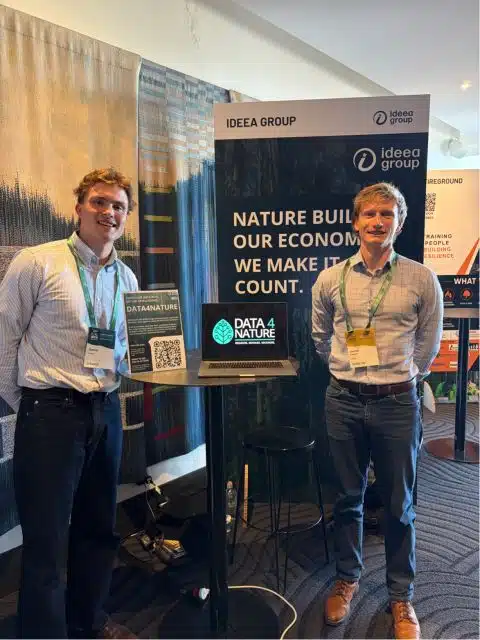
Data platform’s purpose built for natural capital monitoring, such as DATA4NATURE, are making the evidence infrastructure increasingly operational.
In most cases, the gap is no longer conceptual readiness. It is implementation capacity and that is where value will either be captured or lost.
What becomes possible when this gets built properly
Natural capital accounting does not require reducing ecosystems to simplistic financial proxies. It requires something much more practical: measuring changes in natural systems and integrating them into the frameworks that already guide investment, policy and business decisions.
For investors, that means nature related risks and dependencies that currently sit outside the balance sheet become visible.
For governments and organisations, it means better information, better capital allocation and fewer decisions made with critical blind spots.
The work is not ideological, it is institutional. Building the data, methods and systems that allow nature to sit alongside financial information is already underway.
The organisations that move early will not simply manage risk more effectively. They will help define how natural capital is measured, valued, reported and traded over the decade ahead.
Nature related decisions are becoming increasingly important. They do not have to be made in the dark.
————————————————————————————————————————————————————————–
We work with investors, businesses and governments to bring structure, clarity and confidence to those decisions. Whether you are beginning your natural capital journey or looking to strengthen existing approaches, we would love to explore how we can help.
Contact Us