

✕
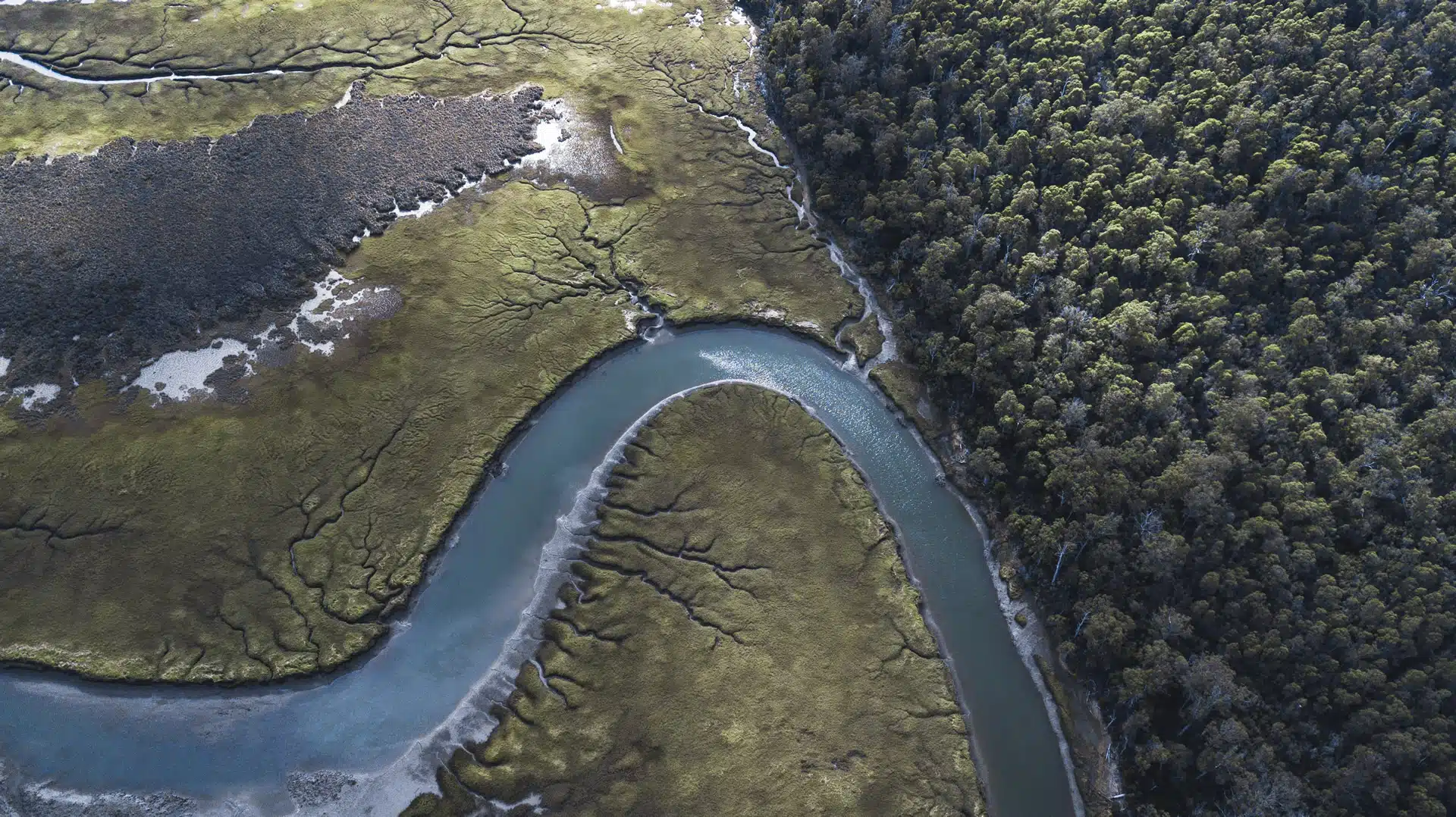
Birds eye view of a forest and river system in Tasmania

Natural capital accounting in the forest sector for Forico in Tasmania

20 November 2018
Combining Forces

Combining Forces: efforts to prevent the degradation and depletion of natural capital must be consolidated, life on Earth necessitates it.

23 November 2018

22 November 2018

Out with the old and in with the new – extending the production boundary of GDP to account for ecosystem services

Share this…

It is widely understood that GDP, as a measure of economic activity, fails to recognise the depletion or degradation of natural capital. A key feature of national accounting (which underpins GDP) is the recording of transactions between economic units, households, business and government. However, it does not recognise transactions between economic units and the environment. The environment provides services to economic units, often referred to as ecosystem services. Accounting for ecosystem services is required to bring measures of the depreciation and degradation of natural capital in line with measures of the deprecation of built capital that is already included in GDP.

While the generic concept of ecosystem services provides an excellent platform for discussion, the ongoing lack of clarity surrounding the definition, classification and measurement of ecosystem services, is a barrier to collaboration across disciplines and its inclusion in measures of GDP.

Our paper applies the principles of national accounting to bring additional rigour and consistency to the discussion on ecosystem services. The key outcome of the paper is a framework for describing the relationship between ecosystems and economic activity that can be used to consistently define, classify, measure and account for ecosystem services.

Mark Eigenraam & Carl Obst (2018) Extending the production boundary of the System of National Accounts (SNA) to classify and account for ecosystem services, Ecosystem Health and Sustainability, DOI: 10.1080/20964129.2018.1524718

✕
Director

Mark Eigenraam

Mark has worked in natural capital accounting for over 20 years. He's helped develop environmental markets. And he's worked in academic institutions and government agencies at all levels.
Mark produced Australia’s first set of experimental ecosystem accounts. He also worked at the United Nations in New York on the System of Environmental-Economic Accounting (SEEA) – the international standard.
Mark advises organisations around the world in the application of natural capital accounting. He develops processes and systems that highlight nature-based risks and opportunities.
Mark has a Master of Commerce, Economics, from the University of Melbourne.
✕
DIRECTOR

Carl Obst

Carl is a global leader in natural capital accounting. He helps organisations around the world measure the benefits of nature.
Carl was the lead author of the System of Environmental-Economic Accounting (SEEA) – the international standard.
Carl has a background in national accounts, including five years as head of the Australian National Accounts with the Australian Bureau of Statistics. He uses natural capital accounting to help organisations make effective and sustainable decisions.
Carl has a Bachelor of Economics, Econometrics, from the University of New England (AU).
✕
Senior Economist

Daniel Whitaker

Dan is an experienced practitioner in economics, science, risk management and finance.
His expertise includes natural capital accounting, non-market valuation, nature- and climate-related risk analysis, sustainable finance, environmental-economic modelling and carbon and energy economics and accounting.
Earlier in his career, Dan worked as a sustainability and climate change consultant in PwC’s Risk Consulting team. He then held a position at the National Australia Bank, where he advised on financial and non-financial risk management. This included considerable work on climate risk scenario analysis.
In his role with IDEEA, Dan supports public and private sector organisations on the use of natural capital data in investment decision-making, risk management and economic analysis.
Dan holds a Master of Applied Economics and Econometrics from Monash University.
✕
Senior Economic Analyst

Lachlan Dawson

Lachlan is an adaptable, curious and details focused economist with a passion for sustainably managing Australia’s natural capital. His experience encompasses environmental economic accounts, carbon and biodiversity markets and economic modelling.
Prior to joining IDEEA Group, Lachlan worked as a Nature-Climate Solutions Manager with BirdLife Australia and as a Consultant in Environmental Economics with Marsden Jacob Associates.
✕
Economist

Ziggy Gelman

Ziggy is an experienced economist who is passionate about identifying the contribution that ecosystems have to our economy and society. In his role with IDEEA Group, Ziggy provides technical analysis of economic and environmental data and supports organisations to understand and integrate a natural capital approach into their operations.
Ziggy has experience in compiling accounts in Victoria, having worked on ecosystem accounts for urban Melbourne, the Great Ocean Road Coast and Parks, Victoria’s forests and Victoria’s marine and coastal region.
Prior to working at IDEEA Group, Ziggy worked with the Victorian Department of Energy, Environment and Climate Action. Ziggy has a Bachelor of Commerce (Economics and Finance) from the University of Melbourne.
✕
Research Analyst

Maria Angelopoulos

Maria ensures that our client work is accurate, timely and concise. Her broad-reaching research work underpins our natural capital approaches, especially in relation to mapping and collating existing policies and data, and identifying themes.
Maria previously worked as a Research Assistant for Melbourne University’s School of Ecosystem and Forest Sciences where she supported the review of the Montreal Process’ Criteria and Indicator framework on sustainable forest management in Victoria.
Maria holds a Postgraduate Diploma in Environment (Master level program) from the University of Melbourne.
✕
Implementation Support

Michelle Butler

Michelle is dedicated to understanding our clients’ needs and helping them to harness their data to achieve meaningful impact stories and actionable insights.
Her career is marked by a deep commitment to the Victorian landscape and over 30 years in public service, agriculture and the environment sector. Michelle has worked regionally in diverse roles in field science, advised landholders in revegetation and land management, trained teachers, property owners and Landcare facilitators in natural resource management, coordinated statewide grant, crowd-funded and market-based programs, and managed expert teams advising government on biodiversity issues.
Michelle has applied science, teaching and workplace training experience and qualifications.
✕
Head of Advisory and Solutions

Muheed Jamaldeen

Muheed is an economist who helps governments and companies value nature, natural hazards and climate risk, and use those values to make investment decisions. He leads IDEEA’s advisory practice, covering cost-benefit analysis, business cases, economic modelling and forecasting, ecosystem service valuation, input-output modelling and nature-related disclosure.
Muheed is focused on the interection between climate and nature, and has undertaken studies for both public and private sector clients applying advanced econometric modelling and spatial analytics to tackle some of Australia’s trickiest policy and strategy questions.
Prior to IDEEA, Muheed was a Director at Deloitte Access Economics, where he led the NSW land-use and infrastructure economics practice. Before that he was an Assistant Director at the Federal Treasury, and former Senior Economist at Oxfam. He holds a Master of Economics and a Bachelor of Economics (Hons) from Macquarie University.
✕
GIS Specialist

Daniel Vardon

Daniel manages IDEEA Group’s spatial data infrastructure, ensuring all geospatial datasets are standardised, catalogued and easily accessible across projects.
Daniel develops and maintains workflows that translate raw spatial data into accounts-ready formats for natural capital and environmental reporting. He is passionate about supporting natural capital accounting with high-quality spatial information and analysis.
Daniel has a Bachelor of Environmental Science from the Australian National University and is currently studying for a Master of Geospatial Science at RMIT.